Even in Los Angeles, where there is no shortage of remarkable hairdos, Harry Peak attracted attention. "He was very blond. Very, very blond," his lawyer said to me, and then he fluttered his hand across his forehead, performing a pantomime of Peak's heavy swoop of bangs. Another lawyer, who questioned Peak in a deposition, remembered his hair very well. "He had a lot of it," she said. "And he was very definitely blond." An arson investigator I met described Peak entering a courtroom "with all that hair," as if his hair existed independently. - From The Library Book by Susan Orlean
After a glance at Twitter where you can find plenty of people who will defend unto death your right to agree with them, it was a pleasure to find this City Journal essay by Theodore Dalrymple on Ricky Gervais, J. K. Rowling, and speaking frankly.
Okay, it took me several years to see this but "Zero Dark Thirty" is one of the best films I've ever seen. I place it at the same level as "The Lives of Others" and that is hard to match.
Reviewing some arcane management information. Ran across the theories of a consultant who once advised some very interesting people in the 1940s. As in "stay far away from them" people. You'll be hearing about that in my next book.
Cultural Offering has some medical advice on combating this serious illness. I would stress drinking lots of water and getting lots of sleep. It also helps if others in the house wait on you hand and foot. That is expedited by having a bell near the bed. I'm sure they'll agree.
Why do something boring? Because if it's an item that you know you should do but have been putting off, you'll benefit from completing it. Excitement can be a distraction. [Photo by Belinda Fewings at Unsplash]
The more people there are in an organization, the more often does a decision on people arise. But fast personnel decisions are likely to be wrong personnel decisions. The time quantum of the good personnel decision is amazingly large. What the decision involves often becomes clear only when one has gone around the same track several times. - Peter F. Drucker
A disintegrating airframe offers little in the way of second chances, and because this sometimes happens, taking to the air tends to heighten one's awareness of that which has come before and that which may come yet. Though travelers convince themselves that statistics watch over them, tension flows through airports like windblown clouds, and as an aircraft rises to 13,000 meters those within it may be drawn to assess what they love and what they hope for in the time left. - From Paris in the Present Tense by Mark Helprin
I fully understand the appeal of Marie Kondo's "tidying up" philosophy. Although she stresses the importance of joy, for many of us in business, tidying up involves the importance of control. Without a tidy system, things can slip away. I am a messy desk person and believe there is more method than madness in my approach. [Do I really think the same way as a clean desk person?] At the same time, some balance is necessary. I will be checking into a middle ground, if one exists. In the meantime, no current photos of my office will be released. [Update: In response to FutureLawyer: Any balance that does not permit some messiness is not true balance. The best organizations take mistakes into account and do not expect perfection.] [Photo by tu tu at Unsplash]
Her hair was the same thin shade of gray as the weather-beaten pickets of the fence around her frozen garden. She had a way with horses, and she was alone on Christmas Eve. There is little in my life I regret as much as that I would not stay for just one cookie, just one cup of tea.
Two more presents to go and that's it. Fortunately, my family has very modest needs and I have a tradition of wrapping gifts in aluminum foil. Photo by Michal Pechardo at Unsplash]
In truth, the Golden State is becoming a semi-feudal kingdom, with the nation’s widest gap between middle and upper incomes—72 percent, compared with the U.S. average of 57 percent—and its highest poverty rate. Roughly half of America’s homeless live in Los Angeles or San Francisco, which now has the highest property crime rate among major cities. California hasn’t yet become a full-scale dystopia, of course, but it’s heading in a troubling direction.
A Layman's Blog has returned. A site where, amid many other things, you may encounter music, humor, and Emerson. [Photo by Robert Theimann at Unsplash]
Open Culture: The list compiled by Anthony Burgess of the 99 best novels in the English language 1939-1983. As with any list, open to debate. [Photo by Hans Vivek at Unsplash]
Journalism students should study the last paragraph in this article in the Queens Daily Eagle for a sense of why the press is loathed: "Trump’s parents’ graves are located at All Faiths Cemetery in Middle Village. The cemetery was slapped with a lawsuit by New York Attorney General Letitia James earlier this year for allegedly misappropriating funds."
It's cold outside but you are in the mood for entertainment. Do you brave the elements and go to the theater to watch "Cats" or do you grab some popcorn, snuggle up, and watch "Attack of the Killer Tomatoes?"
Their uniform was black and they were the terror of a nation. Their badge was the death's head and they swore eternal allegiance to the Führer. Their flash was the runic double-S and they murdered men in millions. Hardly an aspect of the nation's life seemed safe from their interference; they provided the sentries on the Reich Chancellery and the guards in the concentration camps; they manned the divisions which carried the death's-head symbol to Europe; they occupied key positions in agriculture, the health service, racial policy and scientific affairs; they crushed their way into traditional diplomatic festivities; they had their watchdogs among the ministerial bureaucrats. - From The Order of the Death's Head: The Story of Hitler's SS by Heinz Hohne
Regardless of how you feel about the impeachment proceedings, there may come a time when escape is desirable. Here are some avenues:
Exercise. A designated number of reps or minutes on a machine or simply walking may do wonders.
Research. Harry Truman used to pick out a different country every year and read about it. Music, a specific historical event, and art are other great options.
Immersion. How many of Shakespeare's plays have you read? How about Agatha Christie novels or John Steinbeck or Jane Austen? I am going to get back to re-reading the Aubrey-Maturin novels by Patrick O'Brian.
Nature. I have a fairly good knowledge of birds and animals but am very weak when it comes to trees or geology or constellations.
Ah, but you may feel politics tugging at your sleeve. In that case, read an author with whom you are almost certain to disagree. Don't pick a straw man. Get a serious thinker. Call it escape by engagement.
"The history of English literature is a long and fascinating pageant. It begins roughly sixteen hundred years ago when the Roman legions abandoned the province of Britain and left the native Celts a prey to conquest by Anglo-Saxon tribes from the north of Europe. A primitive, warlike people who fought among themselves, against invading tribes of Danes, and against the harsh British climate, the Anglo-Saxons became known for their hearty feasts, skill in handicrafts, and long, heroic tales, as well as for their brooding, introspective blending of pagan beliefs with Christian teachings. Before they were absorbed by the conquering Normans from France, the Anglo-Saxons had produced the grim epic poem Beowulf and lyrics which sound for the first time in English literature the fascination of the English with the sea." - From England in Literature by Robert C. Pooley, George K. Anderson, Paul Farmer, and Helen Thornton (1963)
When you write a book, it is quite common to go through a mountain of research to find the few nuggets you will eventually use. The research time is not wasted, however, because it provides perspective and a sense of what is important and relevant. Much of life is like that. [Photo by Ron Manke at Unsplash]
A Layman's Blog has gone into the cosmos, at least for a while. It will be great if he returns with posts on a once a week or even once a month basis. But whatever he decides to do, he is missed. [Photo by Alexander Andrews at Unsplash]
I sometimes encounter executives, managers, and supervisors who want strict enforcement of "all of the rules." In response, I ask them to visualize a workplace in which strict enforcement is in place. It usually takes less than a minute for them to realize that a mechanistic enforcement policy - zero tolerance, for example - might not be a wise policy in all circumstances. We are back to two key questions: How much is too much? How much is too little?
The most important change in how one defines the public interest that I have witnessed - and experienced - from 1965 to 1985 has been a deepening concern for the development of character in the citizenry. An obvious indication of this shift has been the rise of such social issues as abortion and school prayer. A less obvious but I think more important change has been the growing awareness that a variety of public problems can only be understood - and perhaps addressed - if they are seen as arising out of a defect in character formation. - From On Character: Essaysby James Q. Wilson [1985 essay on "The Rediscovery of Character: Private Virtue and Public Policy"]
He always wore bright red socks. She wore heavy perfume that smelled like gladiolas. It has been decades since I've seen them but these are usually the first characteristics I recall. All people are novels. They create memorable scenes. [Photo by Olga Guryanova at Unsplash]
Every decision is like surgery. It is an intervention into a system and therefore carries with it the risk of shock. One does not make unnecessary decisions any more than a good surgeon does unnecessary surgery. - Peter F. Drucker
In California, where growing up is optional, the enthusiasms of your teenage years need never be surrendered. Here, perhaps more easily than in any other state, adolescent indulgence may become a lasting lifestyle - thus the "Star Wars" scholar, the marijuana grandmother, the gray-whiskered geezer on Rollerblades. I am not a member of any of these subcultures, but I cling to one treasured habit of my youth - on weekends, I still like to sleep until noon. Read the rest ofAl Mckee's 2003 SF Gate column here. [Photo by John Towner at Unsplash]
Jonathan Turley writing in The Hill on the gross injustice done to Carter Page. An excerpt:
It gets even worse. Throughout Operation Crossfire Hurricane, evidence continued to flow into the FBI that Christopher Steele, the former British spy who wrote the infamous dossier, was unreliable and working against the election of Trump. Not only was he known to be trying to get this false information to the press, but evidence mounted that he misrepresented sources and stated false information. While it took long, someone at the Justice Department finally decided to act on the FISA matter regarding Page. The official in charge of FISA applications, Kevin Clinesmith, was told to ask the CIA again about whether Page had been working for the agency. He was again told that Page was, yet Clinesmith allegedly changed the CIA response to describe Page as not working for it. He is now being criminally referred by Horowitz for falsifying that information.
Nippy outside. Landscapers did major work last week so sunlight has returned to our back yard. Irrigation is beginning to arrive. My wife has a roofer visiting this morning to prepare an estimate which will probably cause me to collapse and drum the floor with my heels. I've had some espresso followed up with French roast coffee so I'm on the verge of supreme awareness. Will be chained to a chair this afternoon in order to make progress on a book writing project that is the raven above my door. Christmas shopping is being done on a sporadic basis in order to avoid last year's panic when I seriously considered getting last minute gifts at the pharmacy, a.k.a. the Aqua-Velva option. Over breakfast, I mentioned a great gift idea for a relative and my wife stared at me and shook her head. I assume that meant no.
As you scramble about for gift ideas, here are a few books that I highly recommend:
"The Madness of Crowds" by Douglas Murray. I wish everyone - especially those in Britain and the United States - would read this book.
"Communism" by Richard Pipes. A short and intelligent overview by one of the top scholars on the Soviet Union.
"The Comedians" by Graham Greene. Great drama in Duvalier's Haiti.
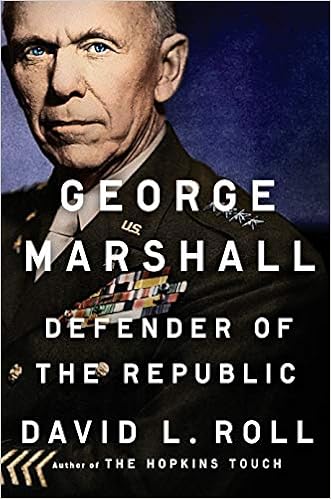
"Churchill & Orwell" by Thomas E. Ricks. Two powerful personalities who shaped our world.
"Berlin Stories" by Christopher Isherwood. The author lived in Berlin as the Nazis came to power. These rather strange stories are reflected in "Cabaret."
"The Last Man in Europe" by Dennis Glover. A novel about Orwell that reveals more than a biography.
"Simple Rules: How to Survive in a Complex World" by Donald Sull and KathleenM. Eisenhardt. A helpful tool for decision-making.
"Atomic Habits" by James Clear. Practical ideas on shaping a positive identity.
"Lonesome Dove" by Larry McMurtry. I recently heard of someone who'd never read this great novel. How can that be?
"Reveille in Washington 1860-1865" by Margaret Leech. For any Civil War buffs on your list. Washington was quite the place in those days.
"All The Light We Cannot See" by Anthony Doerr. A bizarre and riveting tale of a couple of young people in occupied Europe.
"The Wonderful Country" by Tom Lea. A western about the old days along the border with Mexico. I gave a copy to an old friend who, as a child, used to cross the border "at least sixteen times a day."
"Listening to Your Life." Daily meditations by Frederick Buechner. I will finish my second reading on December 31 and will start it over again.
"Wolf Hall" and "Bring Up the Bodies" by Hilary Mantel. Henry VIII and Thomas Cromwell? Fascinating stuff. The long-awaited third volume will be out in March.
Executives who do not make the effort to get their people decisions right do more than risk poor performance. They risk their organization's respect. - Peter F. Drucker
Contrary to legend, a red flag was probably not flying from the roof of the Reichstag on the day Adolf Hitler shot himself. But the order had certainly been issued. - From 1945: The War That Never Ended by Gregor Dallas
Who paid for the project? ~ Who defined the terms? ~ Who set the scope? ~ Who determined the jurisdiction? ~ Who appointed the committee? ~ Who established the standards? ~ Who wrote the minutes? ~ Who did the research? ~ Who chose the experts? ~ Who made the schedule? ~ Who set the deadlines? ~ Who completed the report? It's nice to know these things.
Five hundred years before Christ in a little town on the far western border of the settled and civilized world, a strange new power was at work. Something had awakened in the minds and spirits of the men there which was so to influence the world that the slow passage of long time, of century upon century and the shattering changes they brought, would be powerless to wear away that deep impress. Athens had entered upon her brief and magnificent flowering of genius which so molded the world of mind and of spirit that our mind and spirit today are different. We think and feel differently because of what a little Greek town did during a century or two, twenty-four hundred years ago. What was then produced of art and of thought has never been surpassed and very rarely equalled, and the stamp of it is upon all the art and all the thought of the Western world. And yet this full stature of greatness came to pass at a time when the mighty shadow of "effortless barbarism" was dark upon the world. In that black and fierce world a little centre of white-hot spiritual energy was at work. A new civilization had arisen in Athens, unlike all that had gone before. - From The Greek Way to Western Civilization by Edith Hamilton (1930)
For a long, long time it seemed to me that I was about to begin real life. But there was always some obstacle in the way, something to be gotten through first, some unfinished business, time still to be served, a debt to be paid. Then life would begin. At last it dawned on me that these obstacles were my life. - Alfred Souza
Lieutenant-Commander George Eastwood Ericson, R.N.R., sat in a stone cold, draughty, corrugated-iron hut beside the fitting-out dock of Fleming's Shipyard on the River Clyde. Ericson was a big man, broad and tough: a man to depend on, a man to remember: about forty-two or -three, fair hair going grey, blue eyes as level as a foot rule, with wrinkles at the corners - the product of humour and of twenty years' staring at a thousand horizons. At the moment the wrinkles were complicated by a frown. It was not a worried frown - if Ericson was susceptible to worry he did not show it to the world; it was simply a frown of concentration, a tribute to a problem. - From The Cruel Sea by Nicholas Monsarrat
From A.M. Juster's December 2019 Commentary review of the Apple TV series "Dickinson": "The hip-hop score and the occasional surreal cinematography only distract from the plot, but the slangy contemporary diction is even more distracting. When Emily started calling people "dude," I wondered whether the producers had sought the help of the writer of the Harold and Kumar films to punch up the script."
You must always work not just within but below your means. If you can handle three elements, handle only two. If you can handle ten, then handle five. In that way the ones you do handle, you handle with more ease, more mastery and you create a feeling of strength in reserve. - Pablo Picasso [Photo by Mike Petrucci at Unsplash]